
Lake bank stabilization at Vivid Shores
At Vivid Shores in Bonita Springs, Florida, PROPEX® Armormax®, MIRAFI® FW403 and MIRAFI 140N stabilize lake banks exposed to wind-driven wave erosion. Completed sections are performing as designed.
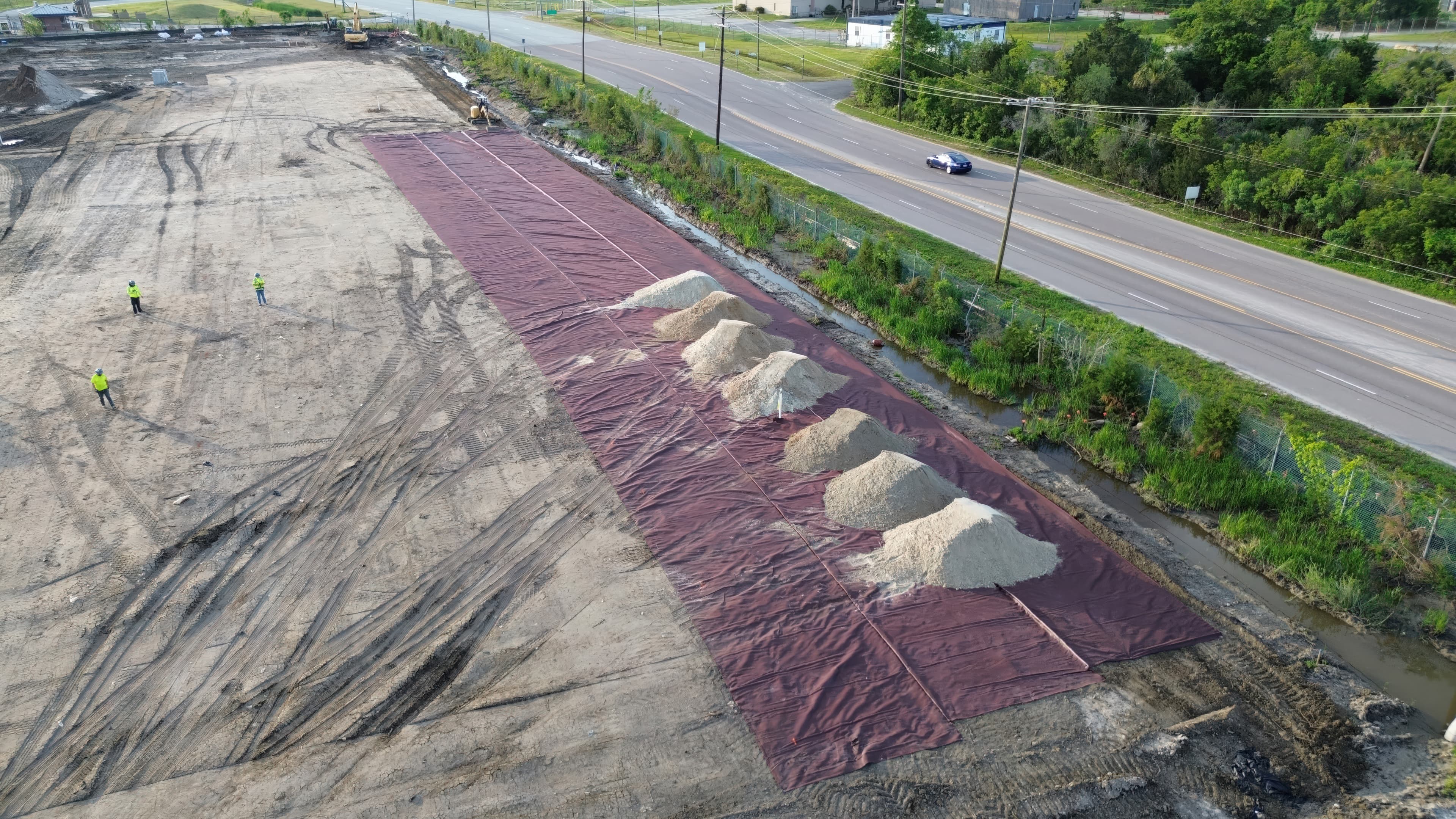
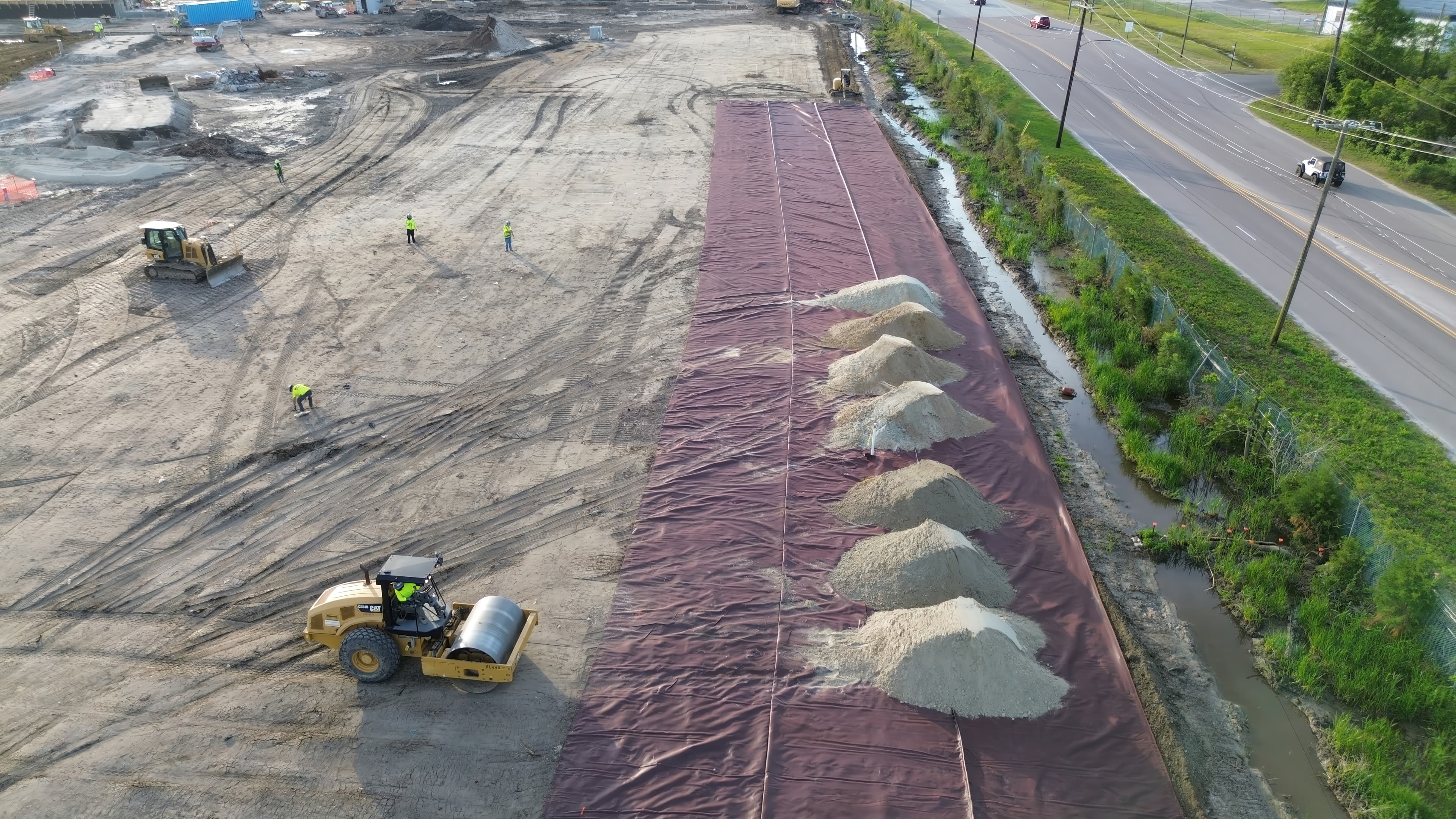
MIRAFI RS380i was installed as part of a multi-layer stabilized platform beneath pavements to reinforce soft subgrades and limit differential settlement.
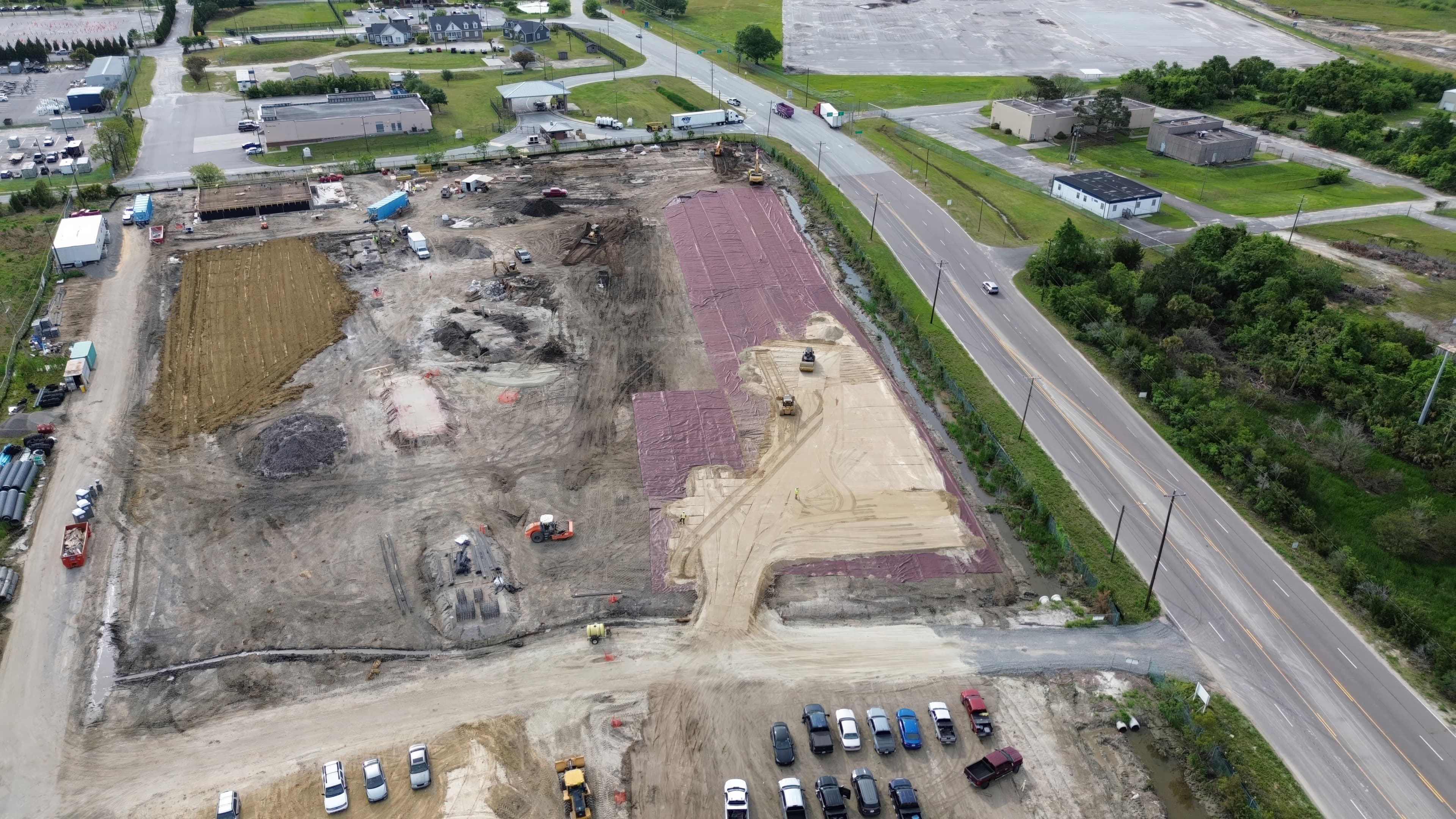
Factory-sewn panels combined multiple rolls into wider sections, reducing overlap requirements, material waste, and installation time on site.
Lake bank stabilization at Vivid Shores
At Vivid Shores in Bonita Springs, Florida, PROPEX® Armormax®, MIRAFI® FW403 and MIRAFI 140N stabilize lake banks exposed to wind-driven wave erosion. Completed sections are performing as designed.
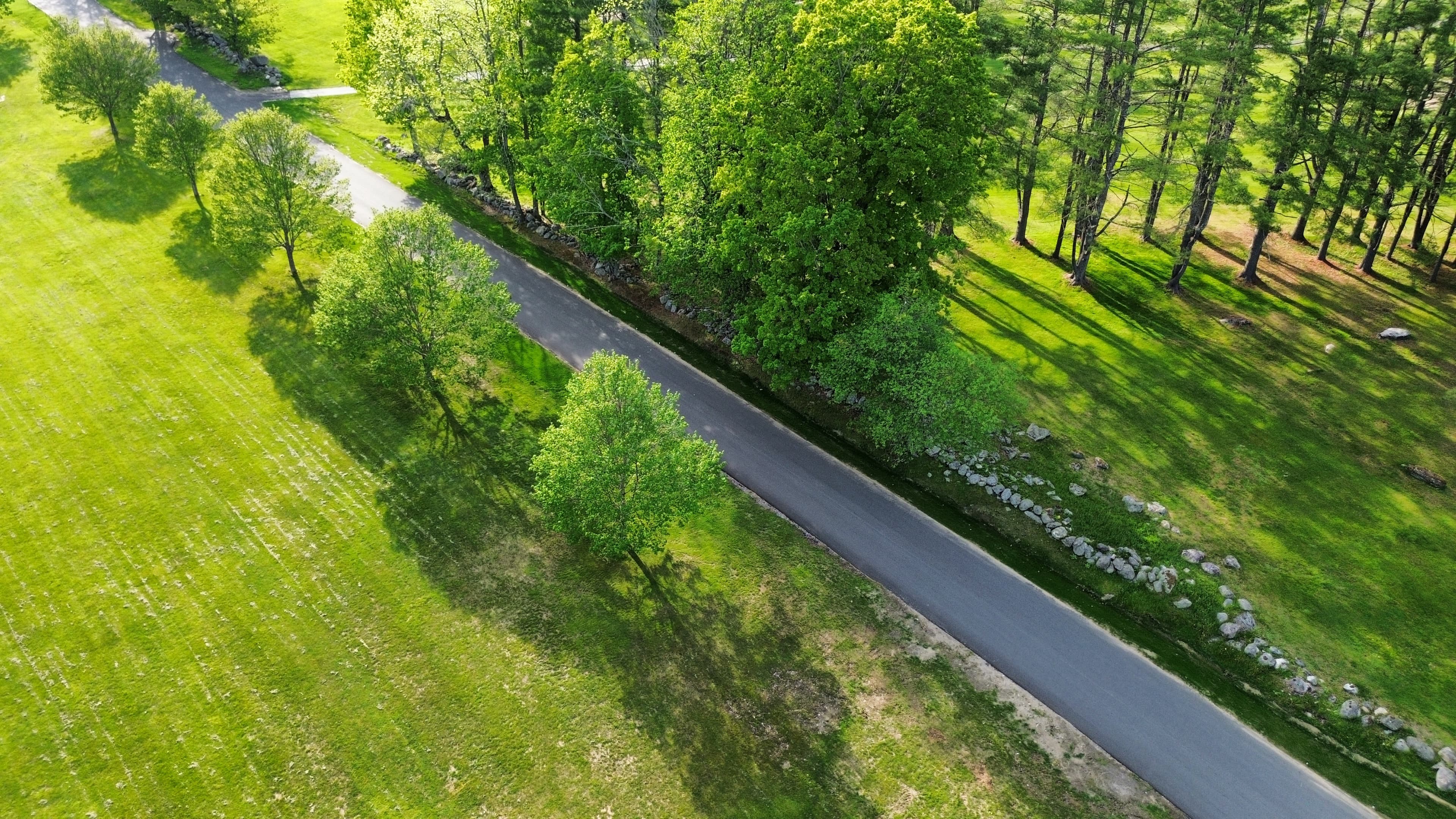
Crowne point country club case study
Crowne Point Country Club rehabilitated a deteriorated Vermont access road with MIRAFI H2Ri, using active moisture management to address saturated soils, frost-related distress and subgrade instability.

GSE HD geomembrane lined salt ponds ensure long-term brine containment
GSE® HD geomembrane lined over 3.4 million m² of evaporation ponds to prevent brine seepage under extreme heat and UV exposure. This continuous barrier eliminated salt discharge and protected the surrounding environment.
The Department of Homeland Security needed to expand the Federal Law Enforcement Training Center (FLETC) located in North Charleston, SC. FLETC’s mission is to train and support the training of federal, state, local and tribal law enforcement officers. The Charleston location is one of three residential training sites in the U.S.
Construction of the expansion was planned on an adjacent, undeveloped site that was previously a landfill used by Charleston Naval Complex. The landfill was closed in the 1970s and was capped with soil and vegetation. The site has seen minimal use since closure.
The project included pavements, spray areas, a skidpad for drive testing, scenario-based training activity areas, sidewalks, and non-structural areas, all of which are expected to experience long-term settlements. Additionally, plans for buildings constructed on pile-supported foundations raised concerns about differential settlements between various training components.
A geotechnical investigation of the site revealed the presence of very soft marine clays and silts throughout the subsurface profile. These soft soils, combined with the historical use of the site as a landfill, posed unique challenges for development.
The primary concern was the potential for differential settlement due to the soft soils and the unknown conditions of the landfill material. The initial design for the paved areas included three layers of geogrid to stabilize the soft subgrades and bridge over weak spots, thereby eliminating or significantly reducing differential settlement across the site. Gulf Stream Construction proposed an alternative design, replacing the specified geogrid with MIRAFI® RS380i. This alternative not only reinforced the paved area but also provided separation to prevent the intrusion or migration of fill over time, ensuring long-term performance. Additionally, the MIRAFI RS380i was over 15 percent more cost-effective than the originally specified geogrid.
The contractor utilized factory-sewn seams to enhance efficiency. The MIRAFI RS380i geosynthetic material, supplied in rolls measuring 17 ft wide by 300 ft long (5 m by 91 m), typically requires a 24 in to 36 in (61 cm to 91 cm) overlap between adjacent rolls. To minimize waste and expedite construction, three rolls were sewn together at the manufacturing facility and then shipped to the job site. The deployment of the geosynthetic material and the construction of the multi-layered, geosynthetic-stabilized platform proceeded as planned.
The use of MIRAFI RS380i not only reinforced the paved areas but also provided separation to prevent the intrusion or migration of fill over time, ensuring long-term performance. This innovative approach addressed the primary concern of differential settlement due to the soft soils and unknown conditions of the landfill material.